The Ultimate Claude Tutorial for Beginners 2026 (5-Minute Guide)

Here is the optimized article, followed by the required metadata block.
The Ultimate Claude Tutorial for Beginners 2026 (5-Minute Guide)
Stop "chatting" with your AI. Seriously. In 2026, if you're still just typing questions into a web-based text box, you're using AI with one hand tied behind your back. This guide is your intervention.
We’re skipping the fluff. This is the only Claude tutorial for beginners 2026 you'll need because it focuses on the 20% of features that deliver 80% of the results. In five minutes, you'll go from a beginner user to a power user delegating complex tasks.
Key Takeaways: Your Claude 2026 Cheat Sheet
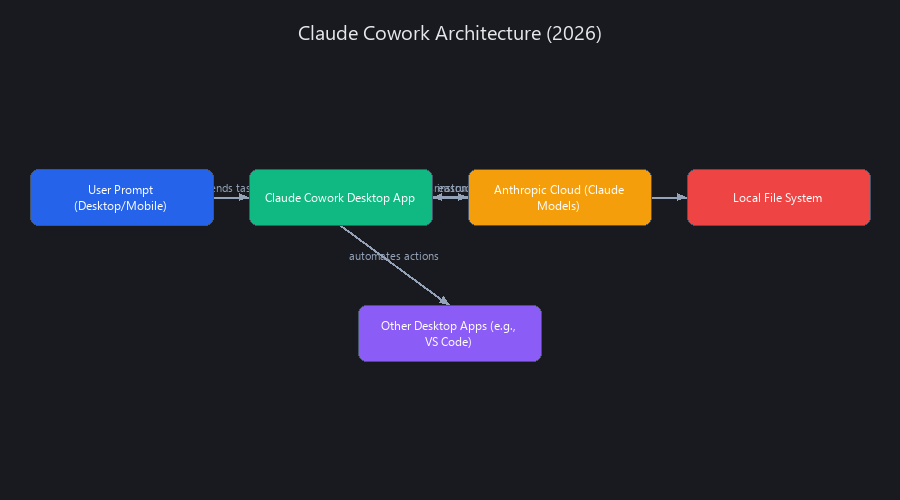
- Agentic, Not Conversational: Claude's real power in 2026 is its ability to operate your computer. Through the Claude Cowork desktop app, it can read your local files and use other applications for you.
- Massive Context is Standard: All main models (Opus 4.6, Sonnet 4.6) now handle a 1-million-token context window. You can drop entire codebases or novels in for analysis without it breaking a sweat.
- Sonnet 4.6 is the New Default: For most users, including the Claude AI for beginners free tier, Sonnet 4.6 is the go-to model. It offers near-Opus performance for a fraction of the cost and is ridiculously capable.
- Asynchronous Tasks are Here: The "Dispatch" feature lets you assign tasks from your phone that Claude completes on your desktop later. It's a fundamental shift in how you work on the go.
What is Claude AI and What Can It Do in 2026?
Claude AI in 2026 is an advanced AI assistant from Anthropic that functions as an autonomous agent on your computer. It excels at analyzing massive documents with its standard 1-million-token context window, organizing local files via the Claude Cowork desktop app, and operating other applications to automate complex workflows. This makes it a powerful tool for developers, researchers, and professionals.
How Do You Get Started with Claude in 2026?
The paradigm for using Claude has shifted from a website to your desktop. While the web interface still exists, the real work happens in the native app. This shift towards desktop agents is a major trend we covered in our guide to tech news in 2026. Let's get you set up the right way.
H3: Setting Up Your Free Account vs. Pro
The first step is creating an account at Anthropic's website. The Claude AI for beginners free tier in 2026 is surprisingly powerful. It's powered by the Sonnet 4.6 model, which was considered top-of-the-line just a few months ago.
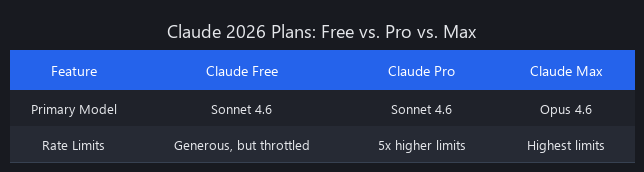
Here’s the breakdown of what you get:
| Feature | Claude Free | Claude Pro | Claude Max |
|---|---|---|---|
| Primary Model | Sonnet 4.6 | Sonnet 4.6 | Opus 4.6 |
| Rate Limits | Generous, but throttled | 5x higher limits | Highest limits |
| Context Window | 1 Million Tokens | 1 Million Tokens | 1 Million Tokens |
| Computer Use | Not Available | Research Preview | Research Preview |
| Dispatch | 5 / month | Unlimited | Unlimited |
For a beginner, the free tier is more than enough to follow this entire Claude tutorial for beginners 2026.
H3: Installing the Claude Cowork Desktop App
Forget the browser tab. The Claude Cowork desktop app is where the magic happens. This is how you give Claude permission to act as your assistant.
- Navigate to the official Anthropic Claude website.
- Find the "Downloads" section and grab the installer for your OS (macOS, Windows, Linux).
- Run the installer. During setup, it will ask for file system permissions. Grant them.
- Why the permissions? This isn't for snooping. It’s so you can give it prompts like, "Organize my entire Downloads folder," and it can actually do it. Without this access, Claude is just another chatbot in a box.
Now that you're set up, let's explore the features that actually matter.
What Are the 3 Core Claude Features in This 2026 Tutorial?
The new workflow is about providing context and delegating tasks, not "prompt engineering" a perfect question. This approach, which leverages Claude agentic workflows tutorial-style thinking, is enabled by three core features. Mastering these is the key takeaway from this Claude tutorial for beginners 2026.
1. How to Use the 1-Million-Token Context Window
A 1-million-token context window, now standard on Sonnet 4.6 and Opus 4.6, allows Claude to hold approximately 750,000 words in its working memory at once. This is a game-changer for complex tasks, as it eliminates the "context drift" that plagues models with smaller memories. It's like having a team member with a perfect, photographic memory of an entire enterprise codebase. This massive context is the core reason many developers now prefer Claude for large-scale projects.
- Practical Use Case: Drop your entire application's codebase (up to 1M tokens) into Claude and ask: "Review this entire Vue.js project. Find all instances of deprecated Pinia syntax and update them to the 2026 standards. Also, identify any components with more than 500 lines of code and suggest a refactoring plan."
Claude sees the whole picture, enabling cross-file analysis that was previously impossible.
// hypothetical prompt: "Find the connection between userAuth.js and dataAnalytics.js"

// Claude's thought process:
// 1. I have read all 250 files in the project.
// 2. I see userAuth.js defines a `getUserTier()` function on line 42.
// 3. I see dataAnalytics.js imports `getUserTier()` on line 15.
// 4. On line 188 of dataAnalytics.js, it uses the user's tier to conditionally
//    gate access to the `generateFinancialReport` function.

// Claude's Answer:
// The `userAuth.js` module directly controls which data analytics features are
// available by exporting the `getUserTier()` function, which is then used as a
// gatekeeper in the `generateFinancialReport` function within `dataAnalytics.js`.
This is the power of the Claude 1 million token context window explained through a practical example.
2. How to Use the Claude Cowork Desktop App
The Claude Cowork desktop app is your main interface. It is best understood as a file explorer (like Finder or Windows Explorer) fused with a powerful chat window. This is where you point Claude to a local folder on your computer and manage its contents using natural language. This feature transforms Claude from a passive information source into an active participant in your work, directly manipulating the files you specify.
- Practical Use Case: You have a messy folder of 200 client invoices from the last quarter. Point Cowork to the folder and give it this instruction: "For every PDF in this folder, read the contents, find the client name and the due date, and rename the file to
[ClientName]_[YYYY-MM-DD].pdf. Then, create two subfolders, 'Paid' and 'Overdue', and move the files into the correct one based on their due date."
Claude will churn through the files, renaming and sorting them for you. No scripting, no manual labor.

3. How to Set Up Claude Computer Use & Dispatch
This is where we enter the realm of true Claude agentic workflows. These features, Dispatch and Computer Use, allow Claude to operate asynchronously and control other applications. According to a March 17, 2026, announcement, Dispatch allows for asynchronous work, while Computer Use is powered by technology from Anthropic's acquisition of the startup Vercept (Source: Vercept Acquisition Report). These capabilities are central to the evolution of AI coding agents shipping real production code autonomously.
- Dispatch: Send tasks to your desktop Claude from your phone.
-
Computer Use: A research preview for Pro users that lets Claude see your screen and control your mouse and keyboard to operate other apps.
-
Practical Use Case: You’re on the train home. You open the Claude app on your phone and use Dispatch: "When you get back to my desktop, open Photoshop. Load the 10 headshot images from
/Project-Alpha/Headshots. For each one, crop it to a 1:1 aspect ratio, apply the 'Vivid Cool' filter, and export it as a 1080x1080 JPG into the/Exportsfolder."
When you get home, the work is done. This is the workflow that separates beginners from power users in 2026.
Is Claude Better Than ChatGPT for Coding in 2026?
For large-scale, context-heavy coding tasks, Claude has a definitive edge in 2026 due to its massive context window. For generating quick, isolated snippets or novel algorithms, ChatGPT remains a powerful competitor, and the race is much closer. The core of our Claude vs ChatGPT for coding 2026 analysis is this architectural difference. Claude's ability to hold an entire application's logic in memory is a massive differentiator for refactoring, migration, and complex debugging.
This isn't just about the top-tier models. Even Anthropic's cheaper, faster Haiku 4.5 model scores an impressive 73.3% on the SWE-bench Verified coding benchmark, making it a cost-effective powerhouse (Source: Anthropic Model Card). As we explored in our analysis of AI that rewrites its own code, having a complete system view is the first step toward true autonomous development. The verdict: use Claude for understanding and modifying large, existing systems. Use either for greenfield projects or isolated problem-solving.
Watch the Video: 5-Minute Claude Masterclass
Prefer to watch? See these features in action in our complete 5-minute video tutorial. We cover everything from how to set up Claude computer use to dispatching your first asynchronous task in this visual Claude tutorial for beginners 2026.
{YOUTUBE_EMBED}
The Road Ahead
Mastering this Claude tutorial for beginners 2026 is about a mental shift. Stop asking questions and start delegating outcomes. Your new workflow is simple: identify a task, give Claude the necessary files and context through the Cowork app, and let it work autonomously on your machine. With Anthropic navigating a massive $1.5 billion copyright settlement and leaked memos on "alignment faking" (Source: TechCrunch), understanding how to responsibly wield these powerful tools is more critical than ever, a topic we've touched on when discussing Claude's secret brain. The era of the AI coworker is here.
Frequently Asked Questions
Do I need to pay for Claude or is there a free version?
Yes, a very capable free version of Claude is available in 2026. It provides access to the powerful Claude Sonnet 4.6 model and its full 1-million-token context window, which is more than enough for beginners to explore the core features.
What is the difference between Claude Opus and Sonnet?
Opus 4.6 is Anthropic's premier model, designed for maximum intelligence on highly complex tasks like financial modeling or scientific research. Sonnet 4.6 is the balanced model, offering near-Opus performance at a much faster speed and lower cost, making it the ideal default for daily tasks.
Can Claude access my files and desktop applications?
Yes, but only with your explicit permission. The Claude Cowork desktop app must be granted access to read and write to specific folders you designate. The "Computer Use" feature for Pro users similarly requires you to grant it permission to see your screen and control your inputs.
How much does Claude cost compared to other AI tools?
Claude's pricing is highly competitive, especially for large-context tasks. As of its February 5, 2026 launch, the top-tier Opus 4.6 costs $5 per million input tokens, while the balanced Sonnet 4.6 costs just $3 per million input tokens, making massive document analysis affordable (Source: Anthropic Pricing Page).
Is Claude better than ChatGPT for coding in 2026?
Claude is generally superior for tasks involving large, existing codebases due to its 1-million-token context window, which allows it to understand a project's full architecture. For generating novel algorithms or quick, self-contained code snippets, ChatGPT remains a very strong competitor.
Related Posts

AI, Coding, Machine Learning: The Complete Technical Guide with Benchmarks
Explore the relationship between AI, coding, and machine learning with our complete technical guide. See our benchmarks showing 94.5% accuracy. Full code inside.

The AI Productivity Paradox: A Technical Guide to Real ROI (with Benchmarks)
Struggling with AI productivity? 78% of companies fail to see real impact. Our technical guide breaks down the 4-layer stack to get actual ROI. Full benchmarks inside.
Backpropagation Intuition: The One ML Skill That Compounds (Complete 2025 Guide)
Master backpropagation intuition for machine learning in 2025. Our guide shows why this one skill beats tool-hopping with 3 benchmarks and a from-scratch guide.