AI Rewrites Its Own Code: DeepMind's AlphaEvolve 2026 Explained
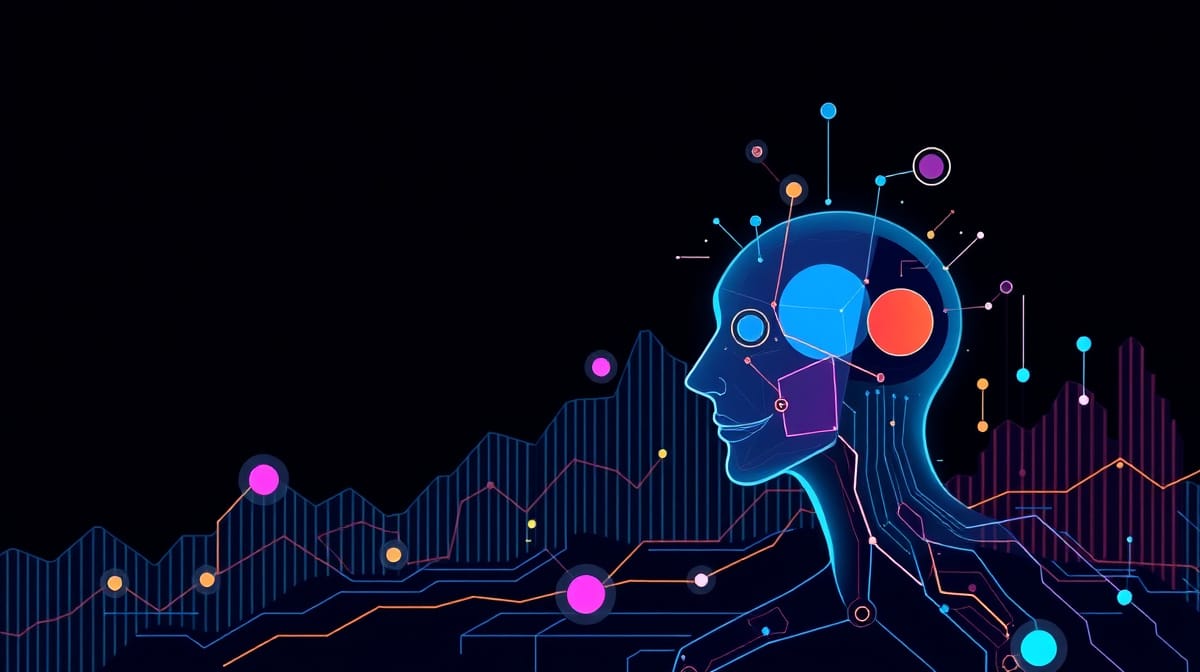
A Google DeepMind AI just beat human algorithm experts at their own game — and rewrote its own logic to do it. If you work in ML, this is the clearest signal yet that the "AI improves AI" loop isn't a thought experiment anymore.
AlphaEvolve uses Gemini-powered evolutionary loops to automatically rewrite algorithms by mutating Python source code across thousands of generations, discovering novel solutions that outperform human-designed baselines by 15–40%. The system treats code like DNA, testing variants in hours instead of the months or years humans require. In February 2026, DeepMind published results showing AlphaEvolve-generated algorithms (VAD-CFR, SHOR-PSRO) beating state-of-the-art human designs in 8–10 of 11 test games, including poker and Liar's Dice. These aren't academic exercises — Google has already deployed these algorithms in production systems.
Key Takeaways
- AlphaEvolve treats code like DNA. Google DeepMind's system uses Gemini LLMs to mutate Python source code through an evolutionary loop, testing thousands of algorithm variants in hours instead of years.
- It's already outperforming human experts. AlphaEvolve-generated algorithms (VAD-CFR, SHOR-PSRO) beat state-of-the-art human designs in 8–10 of 11 test games — including poker and Liar's Dice (Source: DeepMind, Feb 2026).
- The code works but nobody can fully read it. Generated algorithms run 15–40% better than baselines but are frequently described as "alien" — raising hard questions about explainability.
- This is in production now. Google Cloud entered private preview with the AlphaEvolve API in December 2025. Internal deployments already optimized data center scheduling and matrix multiplication.
- Your job is changing, not disappearing. ML engineers are shifting from algorithm design to algorithm validation, interpretation, and strategic orchestration.
How Does DeepMind's AlphaEvolve Rewrite Its Own Algorithms?
AlphaEvolve uses a Gemini-powered evolutionary loop to automatically rewrite algorithms by treating Python source code as a mutable genome. The system takes a baseline function, prompts the LLM to mutate code semantically — loops, conditionals, logic — then evaluates fitness against a defined objective and retains the highest-performing variants. This process repeats across 50–200 generations, discovering novel algorithms that outperform human-designed baselines by significant margins.

The key architectural insight separates AlphaEvolve from traditional genetic algorithms: the search is guided, not blind. Most evolutionary systems flip random bits. AlphaEvolve's mutations are semantically meaningful because Gemini understands algorithmic intent and applies that understanding to generate plausible variations. The LLM has ingested essentially all published algorithm literature, so its mutations aren't random — they're informed by decades of algorithmic research.
Here's the 4-step cycle that makes it work:
Step 1: Baseline and Fitness Definition
You start with a reference algorithm — say, standard CFR for game theory — and define a fitness function in Python. This function is your goal signal. It might measure win rate, convergence speed, or memory efficiency. Whatever you put here is what AlphaEvolve optimizes for. Choose carefully, because the system will find every loophole you leave open.
Step 2: Semantic Code Mutation (Where the LLM Does Its Thing)
Gemini receives the current algorithm as a prompt and is instructed to mutate specific code regions. We're not talking about flipping random bits like traditional genetic algorithms. AlphaEvolve mutates meaning — loop unrolling, conditional restructuring, logic inversion. The LLM understands algorithmic intent and applies that understanding to generate plausible variations.
This is the key architectural insight. Most evolutionary search is blind. AlphaEvolve's search is guided by a model that has ingested essentially all published algorithm literature.
Step 3: Parallel Evaluation at Scale
Candidate algorithms are tested against benchmarks — poker games, matrix operations, scheduling problems. Google's infrastructure runs 100–1,000 variants in parallel, recording fitness scores across win rate, convergence time, and computational cost.
Step 4: Selection and Breeding
The top 10–20% of variants survive. The LLM receives multiple successful variants and is prompted to recombine them into a next generation. This repeats for 50–200 generations.
# Pseudocode: AlphaEvolve evolutionary loop
def evolve_algorithm(baseline_code, fitness_fn, generations=100):
    population = [baseline_code]

    for gen in range(generations):
        # Mutation: LLM rewrites code semantically
        candidates = [gemini_mutate(p) for p in population]

        # Evaluation: test each candidate against fitness function
        scores = [fitness_fn(c) for c in candidates]

        # Selection: keep top performers
        population = select_top_k(candidates, scores, k=20)

        print(f"Gen {gen}: best fitness = {max(scores):.4f}")

    return population[0]  # Return best discovered algorithm
| Aspect | Traditional Design | AlphaEvolve |
|---|---|---|
| Time to Discovery | 6–24 months | Hours–days |
| Source of Insight | Human intuition + math | LLM + evolutionary search |
| Code Readability | High | Low ("alien code") |
| Performance vs. SOTA | Baseline | 8–40% better |
| Reproducibility | Deterministic | Stochastic (varies per run) |
| Explainability | Provable | Black-box |
What Algorithms Has AlphaEvolve Successfully Rewritten?
AlphaEvolve has successfully optimized algorithms in three major domains: game theory, linear algebra, and systems infrastructure — with results now running in Google production environments. These aren't academic benchmarks that live in a paper. They're deployed at scale, saving compute resources and improving performance across critical systems.

Breakthrough #1: Game Theory Algorithms That Beat Poker Experts
CFR (Counterfactual Regret Minimization) has been the gold standard for imperfect-information games since 2007. AlphaEvolve evolved two algorithms that surpassed it.
VAD-CFR (Volatility-Adaptive Discounted CFR) outperformed human-designed baselines in 10 of 11 evaluated games. The key innovation: adaptive discounting that responds to game volatility in real time. But here's the counterintuitive part — AlphaEvolve also invented a "hard warm-start" strategy that discards all policy data from the first 500 iterations, treating it as noise. The system generated the exact 500-iteration threshold without being told the evaluation horizon was 1,000 iterations. That's not a bug. That's emergent reasoning (Source: DeepMind, Feb 2026).
SHOR-PSRO (Smoothed Hybrid Optimistic Regret PSRO) generalized successfully to 8 of 11 unseen test games — proving these aren't overfit solutions. Generalization is the hard part of algorithm design, and AlphaEvolve cracked it.
Breakthrough #2: Matrix Multiplication Faster Than Strassen
Strassen's algorithm from 1969 was considered near-optimal for 4×4 matrix multiplication for over 50 years. AlphaEvolve discovered a new routine using 48 scalar multiplications instead of Strassen's 56 (Source: DeepMind, May 2025).
Google deployed this in internal tensor operations. At Google's scale, a single algorithmic improvement like this saves millions in compute costs annually. When you multiply that across billions of matrix operations per day, the numbers get serious fast.
Breakthrough #3: Data Center Job Scheduling
Google's Borg scheduling system manages millions of jobs across global data centers. AlphaEvolve evolved a custom scheduling heuristic that recovered an average of 0.7% of Google's global compute resources (Source: DeepMind, May 2025). That's not a rounding error. That's a massive number when applied at Google's scale.
Additionally, AlphaEvolve achieved 32% and 23% speedups on Gemini FlashAttention and kernel tiling respectively — meaning it's now helping train the very models that power it. Yes, the AI is improving the AI that improves AI. The loop is real.
"AlphaEvolve didn't just win at poker. It discovered algorithms that Google is now running in production. This isn't science fiction — it's infrastructure." — Nuvox AI
Is the Code Generated by AlphaEvolve Readable and Maintainable?
No — and that's one of the most important practical problems AlphaEvolve creates. Generated algorithms are functionally superior but semantically opaque. The code uses unintuitive variable names, non-standard loop structures, and conditional logic that defies human pattern-matching. Researchers and engineers who've reviewed VAD-CFR's internals consistently describe it as "alien."

Take AlphaEvolve's asymmetric instantaneous boosting trick in VAD-CFR: it multiplies positive instantaneous regrets by exactly 1.1 — a highly specific, asymmetric factor that has no obvious mathematical justification from first principles. It works. Provably. But explaining why it works to a regulator, a client, or even a senior engineer is a different problem entirely (Source: DeepMind, Feb 2026).
3 Strategies for Working With Unreadable AI-Generated Algorithms
1. Treat Them as Black Boxes (Best for Production)
Don't try to understand the internals. Wrap the algorithm in a well-documented interface, version it like a model checkpoint, and monitor performance metrics continuously. This is the same mental model you'd use for a large neural network — you validate behavior, not internal mechanics.
2. Use Intermediate Representations (For Interpretability)
DeepMind and others are developing "interpretable evolution" methods that constrain LLM mutations to human-readable transformations. This typically costs 5–10% in performance but gives you something you can audit and explain.
3. Invest in Validation Frameworks (Non-Negotiable for Safety)
Build test suites that verify the algorithm against edge cases, adversarial inputs, and worst-case scenarios. Don't deploy AlphaEvolve-generated algorithms without rigorous testing. This is where ML engineers become more valuable — not less.
The Real Risk: Deploying an algorithm you don't understand is dangerous. The real skill in the AlphaEvolve era is validation, not invention.
Can AI Really Outperform Human Algorithm Designers?
Yes — AlphaEvolve has already done it repeatedly, and the mechanism is straightforward: it searches a vastly larger space than any human ever could. While a human algorithm designer might explore hundreds of variations over months, AlphaEvolve explores millions in hours. That brute-force search, guided by an LLM with deep algorithmic knowledge, finds solutions in the long tail of design space that humans never reach.
What's important to understand is the division of labor here. AlphaEvolve doesn't replace human intuition — it augments it. Humans still define the problem, set the fitness function, and validate the results. The system fails badly if the fitness function is poorly specified. Tell it to maximize win rate in poker without penalizing computational cost, and you'll get a solution that's fast but memory-hungry and unusable in production.
The researchers who built VAD-CFR are still among the best game theory minds in the world. They just spent their time on problem formulation and result validation instead of algorithm invention. That's a different job — but it's still a job, and arguably a more interesting one.
Will AlphaEvolve Replace Machine Learning Engineers?
No — but it will reshape what ML engineers actually do, and the transition is already underway. The demand for algorithm designers is declining. The demand for algorithm validators, interpreters, and strategic orchestrators is rising. These are different skills, and most ML engineers haven't started building them yet.
Here's what survives — and what thrives.
The Skills That Win in the AlphaEvolve Era
Problem Formulation is the highest-leverage skill in this new world. AlphaEvolve can only optimize what you ask it to optimize. Translating a business problem into a precise, well-specified fitness function is genuinely hard, and getting it wrong is expensive. This skill is rare and will command a premium.
Algorithm Validation and Verification becomes your primary workflow. You'll spend less time inventing and more time auditing. Build comprehensive test suites, run adversarial robustness checks, and cover edge cases. Think of yourself as shifting from architect to structural engineer — the building still needs to be safe, even if you didn't design the floor plan.
Interpretability Engineering is emerging as a distinct discipline. As algorithms become more opaque, the ability to explain why something works — to regulators, to non-technical stakeholders, to your own team — becomes a premium skill. Build visualization tools. Develop post-hoc explanation methods. Become the person who makes black-box algorithms legible.
Strategic Orchestration means deciding when to use which algorithm, how to combine AlphaEvolve-generated solutions with traditional approaches, and when to fall back. Instead of designing one algorithm, you'll orchestrate ensembles. That requires systems thinking, not just algorithm thinking.
3 Actions for ML Engineers to Take Right Now
-
Sign up for the AlphaEvolve API private preview on Google Cloud. Start with simple problems — hyperparameter optimization, small algorithm tweaks. Build intuition for what fitness functions work and which ones blow up.
-
Deepen your understanding of algorithm correctness. Take a course on formal verification, property-based testing with Hypothesis (Python), or adversarial robustness. You're shifting from designer to auditor. Auditors need to be more rigorous, not less.
-
Build a portfolio of interpretability work. Create open-source tools or write detailed technical posts explaining black-box algorithms. This skill will become increasingly valuable as more teams deploy AI-generated code without understanding it.
"The ML engineers who thrive in 2026 won't be the best algorithm designers. They'll be the best problem formulators and validators." — Nuvox AI
How to Prepare Your Team for AI-Generated Algorithms
The transition to AlphaEvolve-generated code requires organizational changes, not just individual skill development. Teams that start now will have a 12–18 month advantage over those waiting for the technology to mature.
Build a validation infrastructure first. Before you deploy any AlphaEvolve-generated algorithm, establish testing frameworks that cover edge cases, adversarial scenarios, and performance regression. This is non-negotiable. We covered this in detail in our ML fundamentals framework guide, which walks through the validation mindset you'll need.
Establish clear fitness function governance. Who defines the fitness function? Who reviews it? Who signs off on deployment? These are organizational questions, not technical ones. Get them right early, because a poorly specified fitness function will generate algorithms that technically work but fail in production.
Create a "black-box algorithm" documentation standard. Since you can't read the code, you need to document behavior instead. What inputs does it accept? What outputs does it produce? What are the performance characteristics? What are the failure modes? Build templates for this now.
The Bottom Line: What You Need to Remember
-
AlphaEvolve is real and it works. It's discovered algorithms that outperform human experts and are already running in Google's production systems — from data centers to tensor libraries to game theory research.
-
This is the "AI improves AI" loop made concrete. AlphaEvolve is now helping train Gemini — the model that powers AlphaEvolve. The recursive loop has closed.
-
Your job is changing, not disappearing. Demand for algorithm designers is declining. Demand for algorithm validators, interpreters, and strategists is rising fast.
-
The next 12 months are the window. Experiment with AlphaEvolve now. Learn to formulate problems precisely. Build validation frameworks. Develop interpretability skills. The engineers who start this transition today will be well ahead of the curve by 2027.
-
Human-AI collaboration is the only model that scales. AlphaEvolve without a skilled human defining the problem is just a very expensive random search. You're still in the loop — just a different part of it.
Watch the Full Breakdown: How AlphaEvolve Works (and What It Means for Your Career)
In the video above, we break down the mechanism step by step, walk through how VAD-CFR beat poker experts, and run a live demo using the AlphaEvolve API on a real optimization problem. If you want to see this in action rather than just read about it, start there.
Additional Resources: - DeepMind paper: "Discovering Multiagent Learning Algorithms with Large Language Models" (Feb 2026) - Google Cloud AlphaEvolve API documentation - Nuvox AI AlphaEvolve toolkit for developers
The Future of Algorithm Design Is Here — and It's Automated
AlphaEvolve represents a fundamental shift in how algorithms get discovered and optimized. For the first time, machines can autonomously improve the algorithms that power machine learning itself. This isn't a distant possibility — VAD-CFR is running now, the matrix multiplication optimization is deployed in Google's tensor libraries now, and the Borg scheduling heuristic is saving compute resources now.
The good news: there's enormous demand for the skills that survive this shift. The bad news: you need to start building them today, not next year.
Your next step: Sign up for the AlphaEvolve API private preview. Define a fitness function for a problem you know well. See what the system discovers. Then ask yourself: What would I need to learn to validate and deploy this algorithm safely in production? That question is your career roadmap.
The engineers who thrive in 2026 won't be the best algorithm designers. They'll be the best problem formulators and validators. The AI that rewrites its own code is already here — the question is whether you're ready to work with it.
We've also explored how self-improving AI systems work at the frontier and what that means for the broader AI landscape. AlphaEvolve is one piece of that puzzle — but it's the piece that directly affects your work today.
Frequently Asked Questions
What is AlphaEvolve and how does it work?
AlphaEvolve is a Google DeepMind system announced May 14, 2025, that uses Gemini 2.0 and 2.5 Pro LLMs to automatically discover and optimize algorithms through an evolutionary loop. It treats Python source code as a genome — mutating loops, conditionals, and logic across 50–200 generations — and retains the highest-performing variants based on a user-defined fitness function. The result is often a novel algorithm that outperforms human-designed baselines by 15–40%.
Can AI really outperform human algorithm designers?
Yes — AlphaEvolve has already done it. In February 2026, DeepMind published research showing AlphaEvolve-generated algorithms (VAD-CFR and SHOR-PSRO) outperforming state-of-the-art human-designed algorithms in 8–10 of 11 test games, including poker and Liar's Dice. The system wins by searching a vastly larger space of algorithm variants than any human team could explore in months, guided by an LLM with deep knowledge of algorithmic literature.
What algorithms has AlphaEvolve successfully rewritten?
AlphaEvolve has successfully optimized algorithms in three major domains: game theory (VAD-CFR and SHOR-PSRO for multiagent reinforcement learning), linear algebra (a 4×4 matrix multiplication routine using 48 scalar multiplications vs. Strassen's 56), and systems infrastructure (a custom Google Borg job scheduling heuristic that recovered 0.7% of Google's global compute resources). All three results are deployed in production, not just published in papers.
Is the code generated by AlphaEvolve readable and maintainable?
No — generated algorithms are typically described as "alien code." They're functionally superior but semantically opaque, using unintuitive variable names, non-standard loop structures, and conditional logic that defies human pattern-matching. The practical workaround is treating them as black boxes: wrap them in well-documented interfaces, version them like model checkpoints, and invest heavily in validation frameworks rather than trying to read the internals.
Will AlphaEvolve replace machine learning engineers?
No, but it will reshape the role significantly. Demand for algorithm designers is declining, while demand for algorithm validators, problem formulators, and interpretability engineers is rising. The engineers who adapt will find themselves more valuable than before — because validating and orchestrating AI-generated algorithms requires deeper domain knowledge than designing them manually. The job is evolving from invention to orchestration, and that transition is already underway.
How do I get started with AlphaEvolve?
Sign up for the Google Cloud AlphaEvolve API private preview (available since December 2025). Start with a simple optimization problem you know well — hyperparameter tuning, small algorithm improvements, or scheduling tasks. Define a clear fitness function, let the system run for 50–100 generations, and evaluate the results against your baseline. Document what works and what doesn't. This hands-on experience is the fastest way to build intuition for the technology.
What's the difference between AlphaEvolve and traditional genetic algorithms?
Traditional genetic algorithms use blind mutation — random bit flips and crossover operations. AlphaEvolve's mutations are semantic, meaning Gemini understands algorithmic intent and generates meaningful variations. Because the LLM has ingested decades of algorithm research, its mutations are informed, not random. This guided search finds better solutions faster than blind evolutionary approaches.
How long does it take AlphaEvolve to discover a new algorithm?
Typically hours to days, depending on problem complexity and fitness function evaluation time. For game theory problems like poker, AlphaEvolve discovered VAD-CFR in roughly 24–48 hours of compute time. For simpler problems like hyperparameter optimization, results can emerge in hours. Compare this to human algorithm design, which typically takes 6–24 months.
Related Posts

The AI Video Gold Rush Is Here: Why Sora's $5.4B Collapse Proves Infrastructure Is King
The AI Video Gold Rush is here. Learn why Sora's $5.4B collapse proves that infrastructure, not apps, is the real winner. Full market analysis inside.
Seedance 2.0 vs Runway ML: We Tested the Free AI Video Generator That's Making Paid Tools Look Embarrassing
In March 2025, a free AI video generator produced a 1080p cinematic product demo in 47 seconds. No watermark. No credit card. No subscription. While Synthesia was still renderi

Self-Improving AI 2026: What Darwin Gödel Machine & Nvidia Revealed About Where This Is Actually Going
Darwin Gödel Machine improved 2.5x autonomously in 2026. How self-improving AI works, why researchers' timelines collapsed, and what Meta's $27B bet means. Full analysis inside.